
Understanding How Online Slot Games Work

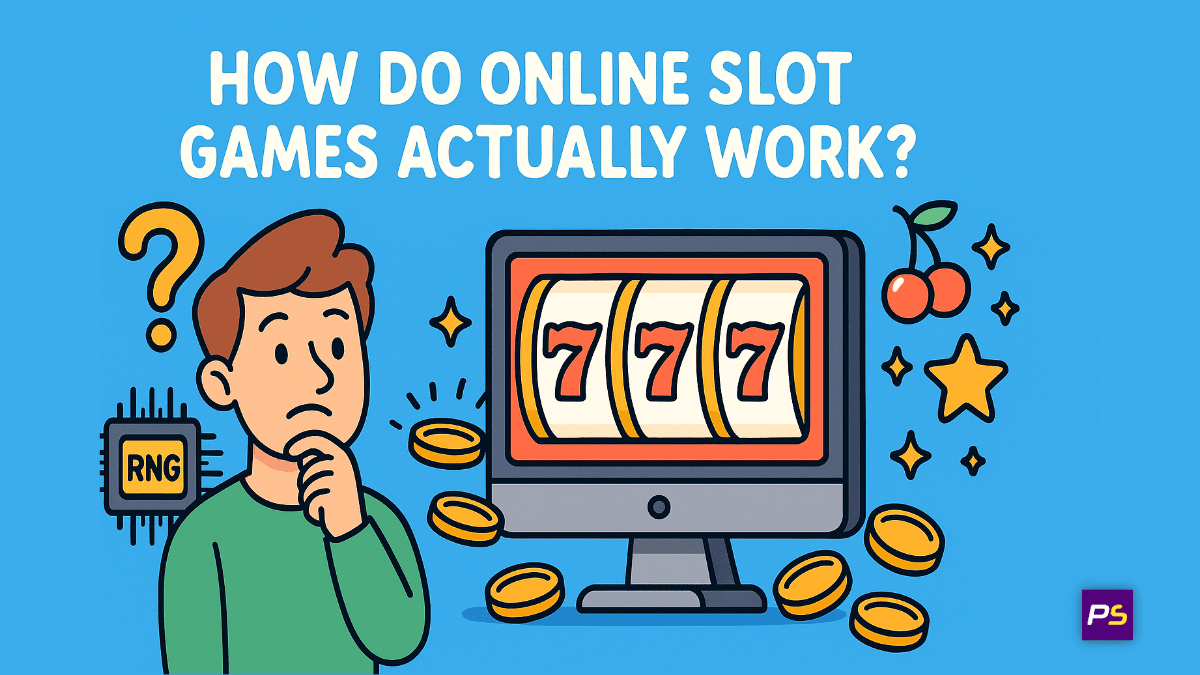
Slot games look simple: press a button, watch the reels spin, and hope for a win. But behind the flashing lights and catchy sounds lies a clever mix of mathematics, software, and strict testing. Every modern slot game, whether online or on a casino floor, is powered by algorithms that make sure outcomes are entirely random and fair. Knowing the basics, terms like RNG, RTP, volatility, and hit frequency, helps you understand what’s really happening each time you spin.
Random Number Generators (RNG)
How RNGs actually work
Every single outcome in a slot game comes from a Random Number Generator, or RNG. This is specialised software that continuously produces sequences of numbers at lightning speed, thousands per second. When you hit “spin,” the program instantly stops on the current sequence, and those numbers determine which symbols appear on each reel.
Because the RNG is constantly running, it’s impossible to predict or influence what combination it’ll land on next. Each spin is entirely independent of the last, no memory, no pattern, no rhythm to crack.
So, when players talk about a machine being “due for a win” or “hot right now,” that’s just wishful thinking. The RNG doesn’t care about past results. Whether you’ve just lost ten spins in a row or hit a bonus round, the next spin has the same odds.
Fairness and testing
Slot developers don’t just slap together an RNG and hope for the best. Before a game can go live, the RNG is tested by independent labs to ensure that it produces random, unbiased results. These labs run millions of simulated spins to check that outcomes match what’s statistically expected.
The software also can’t “adapt” to your play. That means it can’t secretly tighten up after a big win or loosen up when you’re losing. The RNG must behave the same way for every player, every time.
Why this matters
The RNG is what makes slot games trustworthy. It ensures that what you see, the reels, the animations, the bonuses, are all just visual ways of showing you what the RNG has already decided. Once you press spin, the result is locked in, long before the reels come to a stop.
Server-Side vs Machine-Based RNGs
Land-based machines
Physical slot machines, the ones you see in casinos, utilize a microchip with RNG (Random Number Generator) software built into it. That chip runs constantly, cycling through thousands of number combinations per second. When you press the spin button, the RNG locks onto a single number sequence, which corresponds to a specific reel position.
Changing any aspect of that setup, such as the payout percentage or symbol distribution, typically requires physically replacing or reprogramming the chip. That’s why casino staff can’t just “turn a dial” to make a slot pay more or less.
Online slot games
Online slots work the same way conceptually, but the RNG runs on the game provider’s server instead of inside a physical machine. When you click spin, your device sends a request to the server. The RNG selects the outcome in that moment, then sends back instructions for your game to animate the reels accordingly.
Each player’s game session runs independently, meaning your results aren’t affected by how anyone else is playing the same game.
And no, online casinos can’t tweak your payout in real time. Game settings, such as RTP or symbol mapping, are fixed in the approved game version and can’t be changed during play.
RTP (Return to Player)
The long-term maths
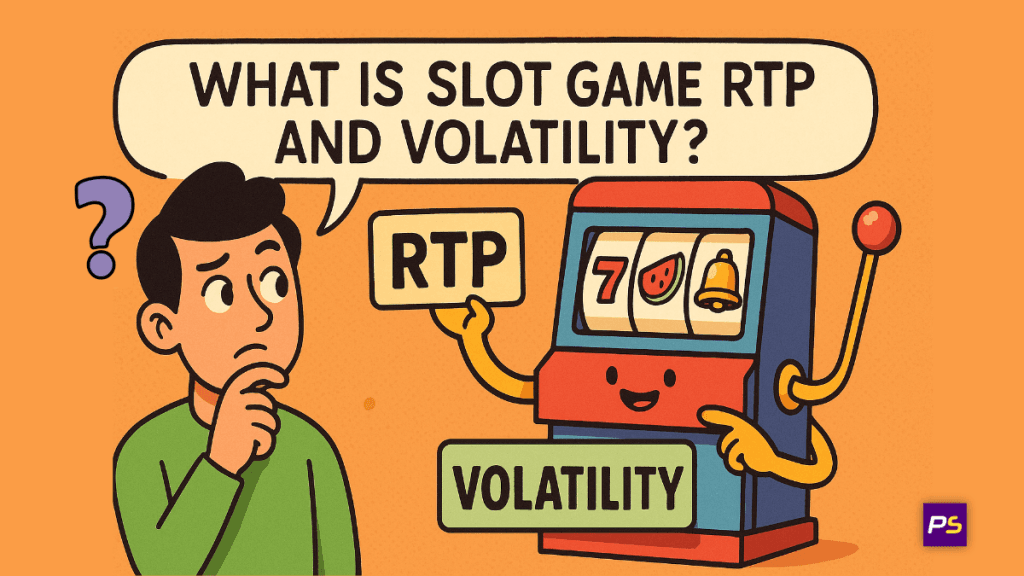
The Return to Player (RTP) percentage tells you how much money a slot game is designed to pay back to players over the long term. For example, a slot with a 96 % RTP will theoretically return R96 for every R100 wagered, averaged out over millions of spins.
That doesn’t mean you’ll always get 96 % of your bets back after a short session. In the short term, you can win big, break even, or lose most of your bankroll. But across an enormous number of plays, the overall returns tend to match the stated percentage.
Here’s the formula:
RTP = (Total payouts ÷ Total bets) × 100
A 96 % RTP also implies a 4 % house edge, the amount the casino statistically expects to keep over time.
Why RTP differs between games
Each slot has its own mathematical model. Some are built for extended play sessions with frequent small wins, while others are designed for big but rare payouts. Both can have the same RTP, but the “feel” of the gameplay will be completely different. That’s where volatility comes in; more on that shortly.
Generally, modern online slots have an RTP range of 94%–98%, depending on the provider. Games with progressive jackpots usually have lower base-game RTPs, because part of every wager goes into funding the jackpot pool.
Checking RTP
Most online slots show their RTP on the information or paytable screen. If it’s not visible there, you can usually find it in the help section of the casino’s website or within the developer’s documentation. It’s always worth checking before you play. A higher RTP doesn’t guarantee wins, but it does slightly improve your odds in the long run.
 125% Match Bonus up to R3,750+125 Free Spins
Fixed vs Progressive Jackpots
Fixed jackpots
A fixed jackpot slot always offers the same maximum payout, no matter how long the game has been running or how many people have played. The maths behind the game is straightforward, and its RTP doesn’t fluctuate.
Because the jackpot is static, these games tend to pay out more consistently and have lower volatility. You’ll often see smaller wins, but they come around more often.
Progressive jackpots
Progressive jackpots, on the other hand, pool a small portion of every bet into a shared prize fund that keeps growing until someone wins it. Some progressives are local (linked to a single casino), while others are networked across multiple sites or providers, allowing the prize to reach eye-watering levels.
However, because a percentage of every wager feeds the jackpot, the base-game RTP is usually lower, sometimes in the 92 % to 95 % range. And while those massive wins do happen, the odds are astronomical. You’re trading consistent returns for a shot at something extraordinary.
Hit Frequency: How Often Slots Pay Out
Hit frequency refers to how often a slot produces any win, regardless of size. A slot with a 25 % hit frequency will pay something on roughly one out of every four spins. A 15 % hit frequency, on the other hand, might pay once every six or seven spins, but the wins are usually larger.
This stat gives you a sense of a slot’s rhythm. A high hit frequency keeps things lively with regular small payouts, while a low one builds tension between bigger wins.
Developers don’t always publish hit frequency, but you can often feel it after a few minutes of play. If you’re getting small wins often, it’s a high-frequency game. If you’re spinning for ages between big hits, it’s low-frequency.
Knowing this can help you match the game to your own personality or bankroll size. If you want lots of small dopamine hits, opt for a higher hit frequency. If you like suspense and can handle dry spells, choose games with fewer, larger wins.
Volatility: How Big the Swings Are
Volatility/variance describes how much a game’s results are likely to swing up or down during short-term play.
- Low-volatility slots: frequent small wins, smooth gameplay, fewer drastic ups and downs. Perfect if you prefer longer sessions or want to stretch your budget.
- High-volatility slots: fewer wins, but the ones that do land can be big. Great for risk-takers chasing jackpots or massive bonus rounds, but be ready for long losing streaks.
Two slots can both have a 96 % RTP, but the way they deliver that return can feel completely different. One might give you small wins regularly; the other could wipe you out for 50 spins before dropping a huge payout.
Developers usually list volatility in the game’s info screen as “low,” “medium,” or “high.” Pay attention to that before you start; it’s one of the clearest clues about how the game will play.
How All These Elements Fit Together
Think of each slot as a combination of four moving parts:
- RNG – decides what symbols appear
- RTP – defines how much of the total money wagered the game should return to players
- Hit frequency – indicates how often you’ll see wins
- Volatility – determines how big those wins are likely to be
Together, these shape your entire experience. A slot might have a high RTP but low hit frequency, meaning you’ll get solid returns but only through occasional wins. Another might offer non-stop small payouts but little excitement.
Understanding these relationships lets you choose games that actually suit your playing style instead of relying on luck or superstition.
 100% Match Bonus up to R3,000+50 Free Spins
Online vs Land-Based Slots
While both use RNGs and the same basic math, there are a few distinctions worth noting:
| Feature | Online Slots | Land-Based Slots |
|---|---|---|
| RNG Location | Server-based (results generated remotely and sent to your device) | Inside each machine’s microchip |
| RTP Range | Usually 94 %–98 % | Typically 85 %–95 % |
| Transparency | RTP and volatility often listed in-game | Usually hidden or not disclosed |
| Variety | Hundreds of themes, mechanics, and bonus rounds | Limited by hardware and casino floor space |
| Convenience | Instant access, adjustable bet sizes, demo mode | Physical presence required |
| Payout Adjustments | Fixed during gameplay | Requires physical chip replacement |
Online slots benefit from lower operating costs and fierce competition among providers, which typically translates to higher RTPs and more innovative bonus features. Physical constraints limit land-based machines; they have fewer themes, fewer adjustable settings, and normally lower returns.
Practical Tips for Players
- Check the RTP before you play. Anything around 96 % or higher is decent.
- Match volatility to your goal. Want long sessions? Go low. Want big wins? Go high.
- Watch your bankroll. Decide what you’re willing to spend before you start spinning.
- Ignore slot myths. Every spin is random; there’s no such thing as a “due” payout.
- Don’t chase losses. The RNG doesn’t care how long you’ve been playing; quitting after a bad run is smarter than doubling down.
Wrapping It Up
Slot games are built to entertain, but they’re also finely tuned pieces of software governed by mathematics. The Random Number Generator makes every spin truly random, the RTP sets the long-term return rate, and the game’s volatility and hit frequency define its personality.
Slot Game FAQ’s
Recommended Online Casinos & Sportsbooks
Try your luck at any of these fine online casinos/sportsbooks:
 10 Free Spins – 12 Masks of Fire Drums+ 10 Free Aviator Flights + R10 Free Bet
 100% Match Bonus up to R3,000PANTHER1
 100% Match Bonus up to R3,000